
Dealer productivity is a critical but often overlooked factor in casino table game profitability. A dealer who deals 15% more hands per hour than the pit average generates 15% more theoretical win for the property, assuming constant bet sizes and win percentages. Improving dealer productivity through technology — rather than through training or incentive programs alone — represents one of the highest-ROI opportunities in casino operations. RFID-enabled gaming tables deliver measurable productivity gains by automating the manual tasks that consume dealer time and by providing real-time feedback that enables continuous improvement.
The Productivity Bottleneck in Manual Operations
To understand how RFID improves dealer productivity, it is necessary to understand what dealers spend their time doing beyond dealing cards and resolving bets. Across a typical 8-hour shift, a dealer’s time is allocated approximately as follows:
– Dealing and resolving bets: 55-60%
– Chip counting and verification (fills, credits, deposits, buy-ins): 15-20%
– Manual recording of chip movements and bet sizes: 5-10%
– Responding to pit manager requests for table status updates: 5-8%
– Miscellaneous tasks (tidying the table, responding to player questions, handling disputes): 5-10%
The non-dealing tasks are essential for game integrity and player service, but they reduce the time available for dealing hands. On a fast-paced table, a 5-minute delay for a fill, a credit, or a dispute can reduce hands per hour by 10-15%. Over an 8-hour shift, these delays accumulate to 30-60 minutes of lost dealing time, representing 10-20% of the dealer’s productive capacity.
RFID tables address these bottlenecks directly by automating the manual tasks and providing real-time data that eliminates the need for pit manager inquiries.
Automated Chip Counting and Verification
The most immediate productivity impact of RFID tables is the elimination of manual chip counting. Traditional table operations require dealers to count chips during fills (when the cage delivers additional chips to the table), credits (when chips are removed from the table to the cage), and deposits (when a player buys in at the table). Each counting task takes 1-3 minutes, during which the dealer is not dealing hands.
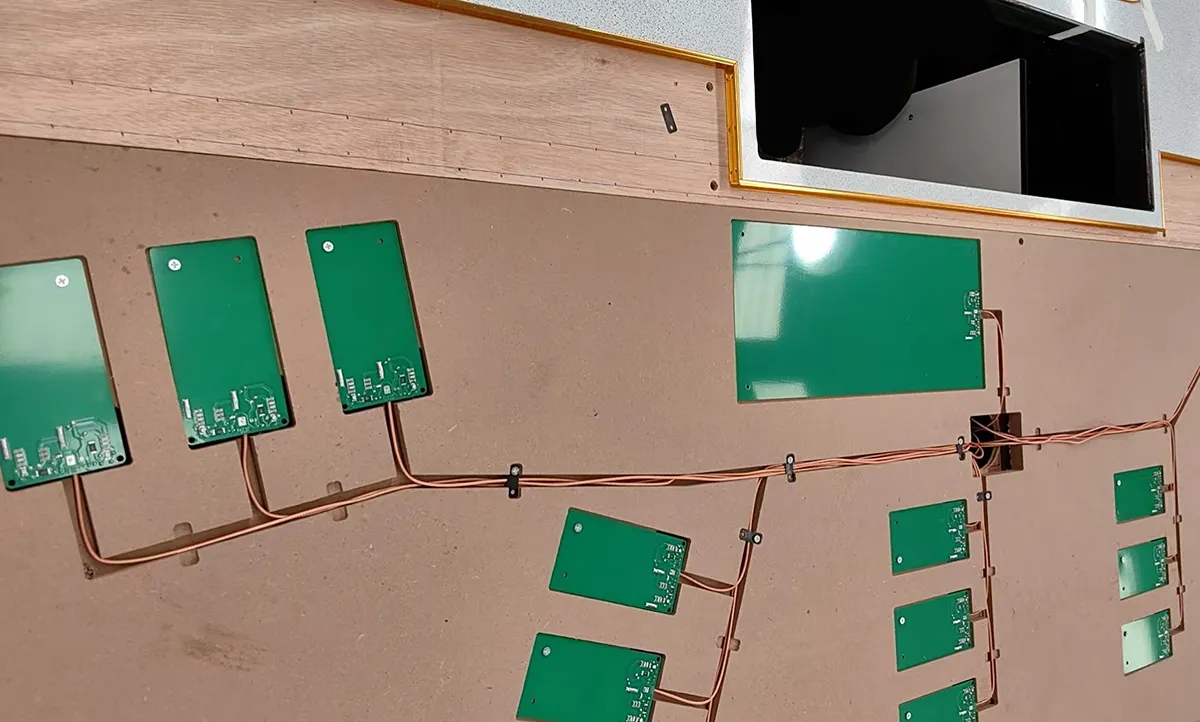
With RFID tables, chip counting is automated. When a fill arrives, the runner places the chips in the table’s RFID-enabled tray. The sensor board reads the chips instantly, confirming the count and denomination. The dealer is notified on the display terminal that the fill has been verified. No manual counting is required. The time savings per fill is 1-2 minutes, and fills occur 2-4 times per shift per table.
Credits and deposits are similarly automated. When chips are removed from the table for a credit, the sensor board reads the chips as they are placed in the transport container, confirming the count before the container leaves the table. When a player buys in at the table, the dealer simply places the cash in the drop box and the system records the buy-in amount based on the chip count. The automation eliminates counting delays and allows the dealer to return to dealing immediately Casino Gaming Table RFID Solution.
Real-Time Bet Validation
In manual operations, dealers are responsible for mentally calculating payouts and verifying that the payout matches the bet and the game result. This mental calculation creates cognitive load that can slow dealing speed and increase error rates, especially during complex games with multiple side bets or during high-limit play where payout amounts are large.
RFID tables provide real-time bet validation. When a round resolves, the system calculates the exact payout based on the chips sensed in each betting zone and the game result entered by the dealer. The calculated payout is displayed on the dealer’s terminal. The dealer can verify the payout against the display before distributing chips, eliminating the need for mental calculation.
This real-time validation serves two productivity purposes. First, it reduces the time required to resolve each hand, because the dealer does not need to calculate the payout mentally. Second, it reduces errors, which in turn reduces the time spent resolving disputes and investigating discrepancies. A dealer who makes fewer errors spends less time answering pit manager questions and more time dealing.
Reduced Dispute Resolution Time
Player disputes over payouts are a significant productivity drain. When a player disagrees with a payout, the dealer must stop dealing to resolve the dispute. The pit manager is typically called to the table, the chips are recounted, the game result is reviewed on surveillance, and a decision is made. The entire process can take 5-15 minutes, during which the table is effectively closed.
RFID tables reduce dispute resolution time in two ways. First, because payouts are calculated by the system and displayed to the dealer, there are fewer disputes — players trust the system more than they trust a dealer’s mental calculation. Second, when disputes do occur, the RFID system provides the exact chip count and payout calculation, which can be displayed to the player on a pit manager terminal. The dispute is often resolved in under 1 minute because the data is definitive.
Surveillance review is also faster with RFID data. Instead of reviewing video footage to determine which chips were in which zones, the surveillance team can access the RFID chip read log, which provides the exact count and location of every chip at the time of the dispute. The time savings for surveillance alone can be 5-10 minutes per dispute.
Continuous Performance Feedback
RFID systems provide dealers with continuous performance feedback that enables them to improve productivity over time. The feedback is delivered through multiple channels:
**Real-time display.** The dealer’s terminal displays hands per hour, error rate, and payout accuracy in real time. Dealers can see immediately when their dealing speed slows or when they make an error, and they can self-correct without waiting for a pit manager to provide feedback.
**Shift-end reports.** At the end of each shift, the dealer receives a performance report summarizing hands per hour, error rate, dispute count, and fill/credit processing time. The report is compared against the pit average and the property average, giving the dealer a clear benchmark for improvement.
**Training integration.** When a dealer’s performance data indicates a specific area for improvement — such as slow fill processing or high error rate on side bets — the training department can provide targeted coaching. The coaching is based on actual performance data rather than general observations, making it more effective and more acceptable to the dealer.

The continuous feedback loop creates a culture of performance improvement that benefits both the dealer (who can increase their tips through faster, more accurate dealing) and the property (which benefits from increased hands per hour and reduced errors).
Streamlined Shift Changes
Shift changes are among the most time-consuming administrative tasks in table game operations. Traditional shift changes require the outgoing dealer and the incoming dealer to count the chips in the tray together, record the count on a paper log, and have the count verified by the pit manager. The process takes 5-10 minutes per table, and with multiple tables changing shifts simultaneously, the total time can be 30-60 minutes for a pit.
RFID tables streamline shift changes dramatically. The system provides a real-time tray count that is verified by the sensor board. The outgoing dealer and incoming dealer review the count on their terminals, confirm that it matches their physical observation, and sign off electronically. The pit manager reviews the electronic shift change record on their terminal and approves it with a single click. The entire process takes under 2 minutes per table, freeing up 8-15 minutes of productive dealing time per shift per table.
Integration with Pit Management Workflows
Pit managers spend a significant portion of their time requesting table status updates, verifying chip counts, and investigating variances. These tasks require the pit manager to visit each table, interrupt the dealer, and manually record information. The process is time-consuming and disrupts game flow.
RFID tables provide pit managers with real-time table status dashboards that eliminate the need for manual checks. The dashboard displays, for each table:
– Current chip count in the tray
– Current bet sizes by player and by zone
– Recent hands per hour and win/loss
– Any active alerts (variance, error, dispute)
The pit manager can monitor all tables from a single terminal, identify issues immediately, and intervene only when necessary. This reduces the number of pit manager visits to each table, allowing dealers to deal more hands without interruption.
Measuring Productivity Improvements
The productivity improvements from RFID tables can be measured through several key performance indicators:
**Hands per hour.** The most direct measure of dealer productivity. RFID deployments typically increase hands per hour by 5-10% through reduced non-dealing time.
**Error rate.** Measured as errors per 1,000 hands. RFID deployments typically reduce error rates by 40-60% through real-time validation and feedback.
**Dispute count.** Measured as disputes per 1,000 hands. RFID deployments typically reduce dispute counts by 30-50% through definitive payout data and faster resolution Macaumr RFID Solutions.
**Fill and credit processing time.** Measured in seconds per fill or credit. RFID deployments typically reduce processing time by 50-70% through automated counting.
**Shift change time.** Measured in minutes per table. RFID deployments typically reduce shift change time by 60-75% through electronic verification.
These metrics provide a comprehensive view of productivity improvements and can be tracked over time to measure the ongoing impact of RFID deployment.
Frequently Asked Questions
How much can RFID tables increase hands per hour in practice?
The increase in hands per hour depends on the game type, the starting productivity level, and the dealer’s response to the technology. For baccarat tables, where rounds are fast and fills are frequent, RFID deployments typically increase hands per hour by 8-12%. For blackjack tables, where rounds are slower and fills are less frequent, the increase is typically 4-8%. The variation reflects the extent to which non-dealing tasks consume dealer time in each game type. Properties that combine RFID deployment with dealer training and incentive programs see the largest improvements.
Do dealers resist RFID tables because they feel monitored?
Initial resistance is common, as with any workplace monitoring technology. However, most dealers adapt quickly when they understand that the system is designed to support them, not to police them. The key to acceptance is transparency: explain how the data will be used, emphasize that the goal is to reduce errors and disputes (which benefit dealers as well as the property), and ensure that performance data is used for coaching rather than punishment. Properties that involve dealers in the RFID deployment process — through pilot programs and feedback sessions — report much higher acceptance rates.
Can RFID tables help with dealer scheduling and staffing optimization?
Yes. RFID productivity data enables data-driven dealer scheduling. The system can identify which dealers consistently achieve high hands per hour and low error rates, and those dealers can be scheduled for high-traffic periods and high-limit tables. Conversely, dealers with lower productivity metrics can be scheduled for training shifts or lower-stakes tables. The scheduling optimization improves overall floor productivity and ensures that the most capable dealers are deployed where they have the greatest revenue impact.
What is the learning curve for dealers using RFID table interfaces?
Most dealers become comfortable with the RFID table interface within 2-3 shifts. The interface is designed to be intuitive, with visual displays rather than text-heavy menus. Training programs typically include 4-6 hours of classroom instruction and 8-12 hours of on-table practice with a trainer. The learning curve is shorter for younger dealers and for dealers who are already comfortable with technology, but even experienced dealers with limited technology experience can achieve proficiency within a week of deployment.
Does the productivity improvement justify the investment in RFID tables on its own?
For most properties, productivity improvement alone does not justify the full investment in RFID tables. However, when combined with the other value drivers — shrinkage reduction, error reduction, improved player tracking, and compliance benefits — productivity improvement contributes 15-25% of the total ROI. The productivity improvement is particularly valuable for properties with high labor costs or with dealer staffing constraints, as it enables each dealer to generate more revenue per shift.