
The Foundation of the System
Barcode marked cards are the silent workhorses of every poker analyzer system. Without them, the most sophisticated analyzer hardware is useless. These specially manufactured playing cards carry invisible barcode markings that encode each card’s suit and rank in a machine-readable format, providing the raw data that drives the entire analysis process.
For wholesalers and distributors, understanding the technical details of barcode marked cards is not optional — it is essential knowledge for answering customer questions, troubleshooting setup issues, and credibly positioning products. This deep dive covers the manufacturing process, encoding methodology, scanner-card pairing mechanisms, and the practical considerations that determine card durability and detection resistance.
Manufacturing Process
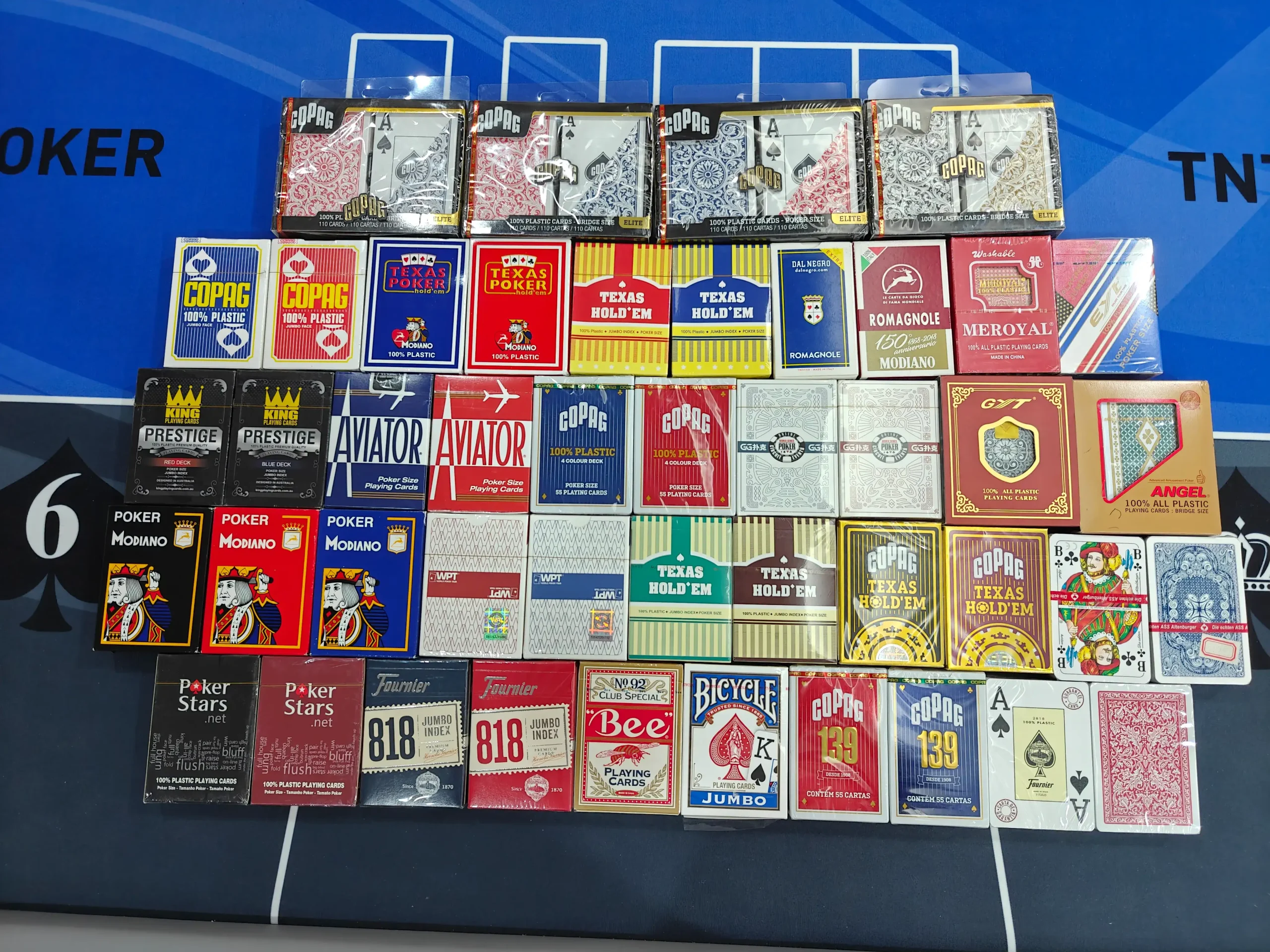
The production of barcode marked cards begins with standard, high-quality playing card stock from established manufacturers such as Copag, Modiano, Fournier, and Bicycle. These base cards are chosen for their consistent paper weight, coating quality, and resistance to wear from repeated handling.
Step 1 — Base Card Selection. Not all card stock is suitable for barcode encoding. The cards must have a smooth, uniform surface finish on the edges to ensure consistent scanning results. Cards with textured or irregular edges produce unreliable barcode reads, so manufacturers carefully select and sometimes specially order card stock optimized for barcode application.
Step 2 — Barcode Application. The barcodes are applied to the long edges of the cards using precision printing equipment. The barcode patterns are extremely small — typically 2–5 mm in length and less than 1 mm in height — making them invisible to the naked eye under normal table lighting. The printing process uses specialized ink that matches the card edge color, further enhancing concealment.
Step 3 — Encoding Verification. After printing, each card goes through an automated verification station that checks the barcode integrity. Cards with smudged, misaligned, or unreadable markings are discarded. This quality control step is critical — a single unreadable card can break the analyzer’s ability to track all hands accurately.
Step 4 — Deck Assembly and Profiling. Verified cards are assembled into standard 52-card decks (or 54-count including jokers, depending on the game). The completed deck is then registered into a digital “deck profile” — a data file that maps each card’s specific barcode pattern to its suit and rank. This profile is loaded into the poker analyzer so the device knows exactly what pattern corresponds to which card.
Step 5 — Packaging and Sealing. Final decks are packaged in their original brand boxes with tamper-evident seals. Many suppliers offer the option to reprint the manufacturer’s original box artwork, ensuring that the marked deck is indistinguishable from a normal deck at the retail or storage level.
Barcode Encoding Methods
There are multiple encoding approaches used in the industry, each with distinct characteristics.
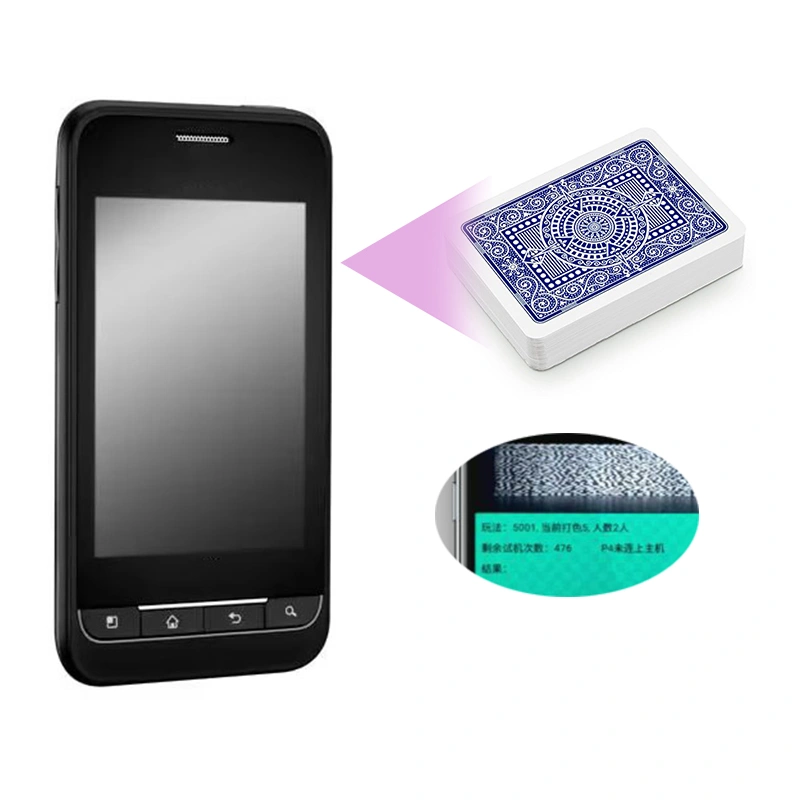
Edge Barcode Marking
This is the most common encoding method. Tiny vertical bars are printed along one or both of the long edges of each card. The pattern of bar widths and spacing encodes the card’s identity. Edge barcodes are read by the analyzer’s camera when the cards are placed face-down on the table, as the card edges remain visible even when the faces are hidden.
The advantage of edge marking is that it does not require the cards to be held or angled in any particular way — they simply need to be within the scanner’s detection zone on the table surface. This makes it the most practical method for real gameplay poker card analyzer.
Corner Micro-Marking
A more advanced encoding approach places the barcode marks in the extreme corners of the card face. These marks are so small that they are invisible to any player seated at a standard distance from the table, even under bright lighting. Only the analyzer’s high-resolution camera can capture and decode them.
Corner micro-marking is more difficult to manufacture consistently than edge marking, making it a premium encoding method. It offers an additional layer of concealment, as even a player deliberately inspecting the cards would not detect the markings.
Full-Face Invisible Print
The most sophisticated encoding method uses ink that is only visible under specific light wavelengths — typically infrared or ultraviolet. The card’s face is printed with an invisible pattern overlay that covers the entire surface. When viewed by a camera filtered to the matching wavelength, the full barcode pattern becomes visible.
This method provides the highest concealment level but requires the analyzer to have the appropriate filtered camera. Not all analyzers support this encoding type. The GS Poker Analyzer Software with its external scanning camera is one of the systems capable of reading full-face invisible prints.
The Scanner-Analyzer Pairing Mechanism
Every marked deck is unique — the exact barcode pattern of your deck will not match another deck from the same factory run. This is intentional. It prevents two customers from accidentally cross-using decks and ensures that each analyzer-deck pairing is deterministic.
The pairing process works as follows:
1. The deck arrives with a deck profile file, typically delivered as a small data file or encoded as a QR code for easy transfer.
2. The profile is loaded onto the poker analyzer via USB connection, Bluetooth transfer, or by scanning the provided QR code with the analyzer’s camera.
3. The analyzer stores the profile and uses it to interpret the barcode patterns it reads.
4. If the customer owns multiple marked decks, each deck’s profile can be loaded, and the analyzer can be switched between them through the settings menu.
Distributors should ensure that every deck shipment includes the corresponding profile transfer method. Customers who lose or misplace the profile data will find their decks unreadable, leading to support requests.
Scanning and Recognition — The Technical Details
When a card is dealt into the analyzer’s detection zone, the scanning process begins immediately.
Image Capture. The analyzer’s camera captures a continuous video stream of the table area. Each frame is analyzed for the presence of card edges, and when an edge is detected entering the scanning zone, the camera adjusts focus and captures a high-resolution image of the barcode region.
Barcode Localization. The processor locates the barcode area within the captured image using edge detection algorithms. This step must account for variations in card position, rotation, and lighting.
Pattern Decoding. The localized barcode image is converted into a digital pattern, which is then matched against the loaded deck profile. The matching algorithm accounts for minor barcode printing variations and surface wear to prevent false negatives.
Result Generation. Once the card’s suit and rank are determined, this information is added to the analyzer’s internal hand state. When all necessary cards have been read, the game algorithm computes the outcome and transmits the result to the earpiece.
A full scanning cycle takes approximately 0.1 seconds on premium analyzers. This speed is achieved through hardware acceleration in the analyzer’s processor combined with optimized image processing algorithms.
Comparing Barcode Card Types
Different marked card types on the market serve different customer needs and budgets.
| Card Type | Encoding Method | Durability | Cost Tier | Detection Risk |
|———–|—————-|————|———–|—————-|
| Standard Edge Barcode | Edge bars | Medium | Budget | Very Low |
| Premium Edge Barcode | Edge bars + coating | High | Standard | Very Low |
| Corner Micro-Marked | Corner dots | Medium | Premium | Extremely Low |
| Full-Face Invisible | Wavelength-specific ink | Medium | Premium | Extremely Low |
| Infrared Marked | Infrared-reflective ink | High | Standard | Extremely Low |
Note that “detection risk” includes the risk of a player spotting the markings by visual inspection. For all types, the risk is extremely low when cards are handled properly and not examined under magnification.
Durability and Practical Lifespan
A marked deck’s usable lifespan depends on the encoding method, card stock quality, and handling frequency. As a general benchmark, a high-quality edge-barcoded deck will maintain reliable reading accuracy for approximately 200–300 full games (hands) of Texas Hold’em.
Factors that shorten deck life include: PokerAnalyzerShop.
Table surface abrasion. Rough or dirty table surfaces accelerate wear on the card edges where barcodes are printed. Using a clean, smooth playing surface extends deck life.
Handling frequency. Decks that are shuffled aggressively or bent during play experience faster barcode degradation. Gentle, professional handling preserves markings.
Moisture and oils. Finger oils, spilled drinks, and humid environments can degrade barcode ink over time. Wiping cards dry between sessions and storing decks in low-humidity conditions are simple preventive measures.
Ink fading. Some barcode inks, particularly on lower-cost decks, fade over extended periods when exposed to direct sunlight or fluorescent lighting. High-quality decks use fade-resistant inks.
Distributors should educate customers on these factors to set realistic expectations for deck lifespan. Including care instructions with each deck shipment reduces complaints and repeat replacement requests.
Marked Deck Trends for Distributors
The market for marked decks continues to evolve. Current trends include:
Expanded brand compatibility. Customers increasingly expect marked decks that match specific casino-standard brands. Suppliers are expanding their deck brand options beyond basic stock. Distributors should verify which brands their chosen supplier offers.
Multi-format decks. Some suppliers now offer decks that are compatible with multiple analyzer systems — a single deck can work with both AKK and CVK analyzers. This simplifies inventory management for distributors who carry both product lines.
Custom branding. For large wholesale orders, some manufacturers offer custom card back designs. This allows distributors to offer a more personalized product, which can command better margins.
Environmental considerations. Demand is growing for marked cards produced with environmentally sustainable materials and processes, a consideration that is beginning to influence supplier selection in more eco-conscious markets.
FAQ
How can I tell if a deck is properly marked?
The markings are designed to be invisible to the naked eye. A properly marked deck should be visually indistinguishable from its unmarked counterpart. The only reliable method for verification is to test the deck with a compatible poker analyzer.
Do marked cards feel different from normal cards?
High-quality marked cards are pressed from the same card stock as the original brand decks and then have barcodes applied using thin, non-tactile ink. Most users cannot detect any difference in feel. Lower-quality decks may have a slight texture difference on the edge, which is why sourcing from reputable suppliers matters.
Can marked decks be read by all analyzers?
No. Decks and analyzers must be paired. A deck encoded for an AKK analyzer will not work with a CVK analyzer unless the deck profile is available for both systems. Some multi-format decks are explicitly designed for cross-platform compatibility.
How many marked decks should a customer buy?
For single user operation, 3 to 5 decks is a practical starting quantity. This allows for deck rotation during extended sessions and provides spares for normal wear replacement. Distributors often offer discount incentives for bulk deck purchases.
What is the shelf life of an unopened marked deck?
When stored in a cool, dry place away from direct sunlight, unopened marked decks have an effective shelf life of 12 to 24 months. Over longer periods, ink degradation and card stock aging can reduce scanning reliability.
Is it possible to clean marked cards without damaging the barcodes?
Light cleaning with a dry, lint-free cloth is generally safe. Wet cleaning, harsh chemicals, and abrasive materials will damage both the card finish and the barcode markings. Distributors should advise customers to limit cleaning to dry wiping only.